
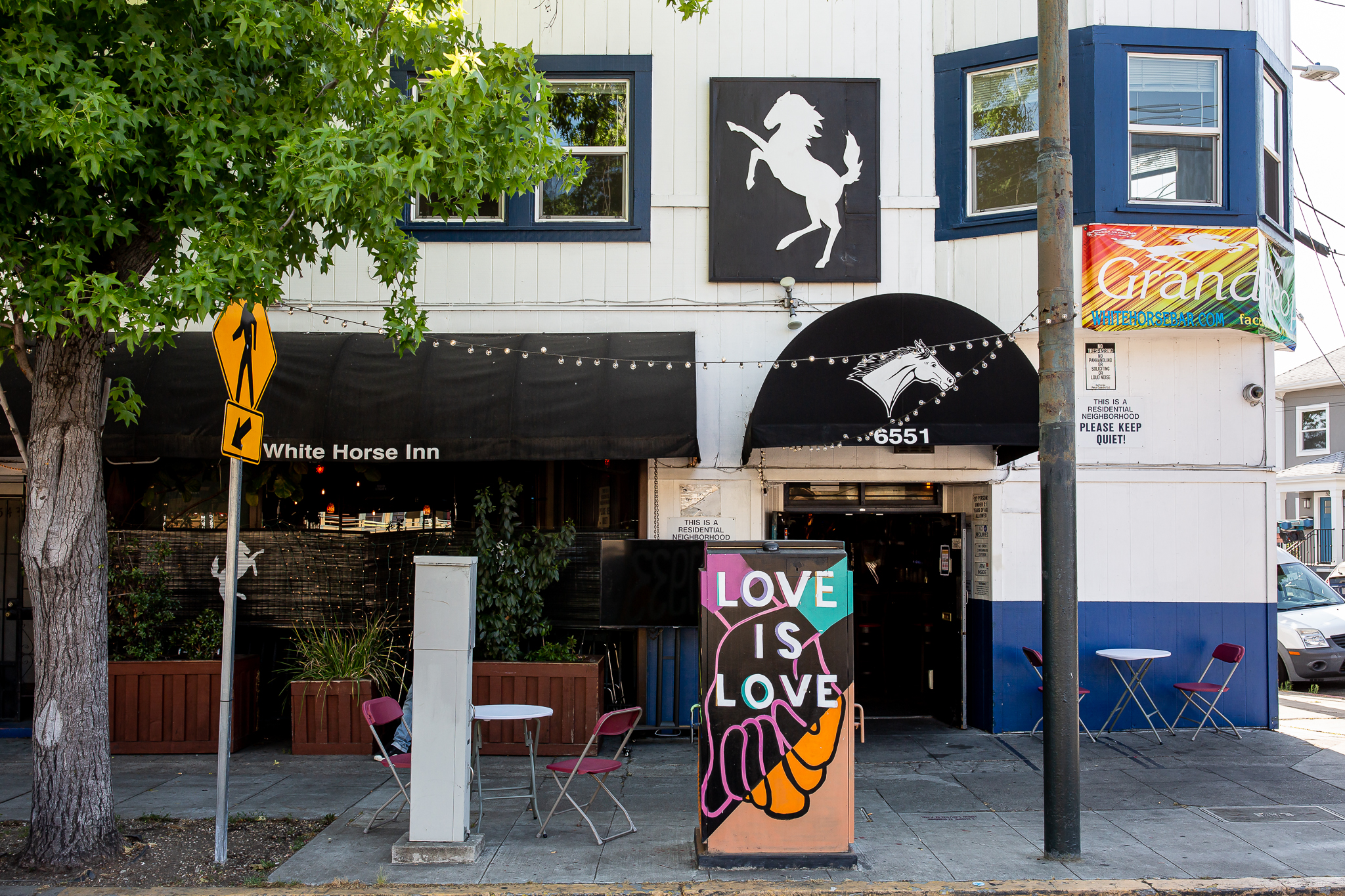
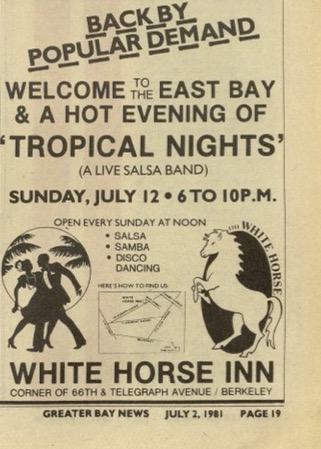
2007 was the first time I went to the The White Horse but it’s legacy in Oakland at the corner of 66th and Telegraph was already over 70 years in the making. Generations of LGBTQ+ folks have found – and continue to find – community in the evolving space. In the spring of 2023, the bar celebrated 90 years in continuous operation (a feat!) with a big party. As part of ongoing documentation of queer histories in Oakland, GEMS recorded memories and juicy stories with party attendees to honor the bar’s legacy. Patty Dingle, the new owner of the bar since 2022, helps frame the bar’s story in this immerse collection of bar memories:
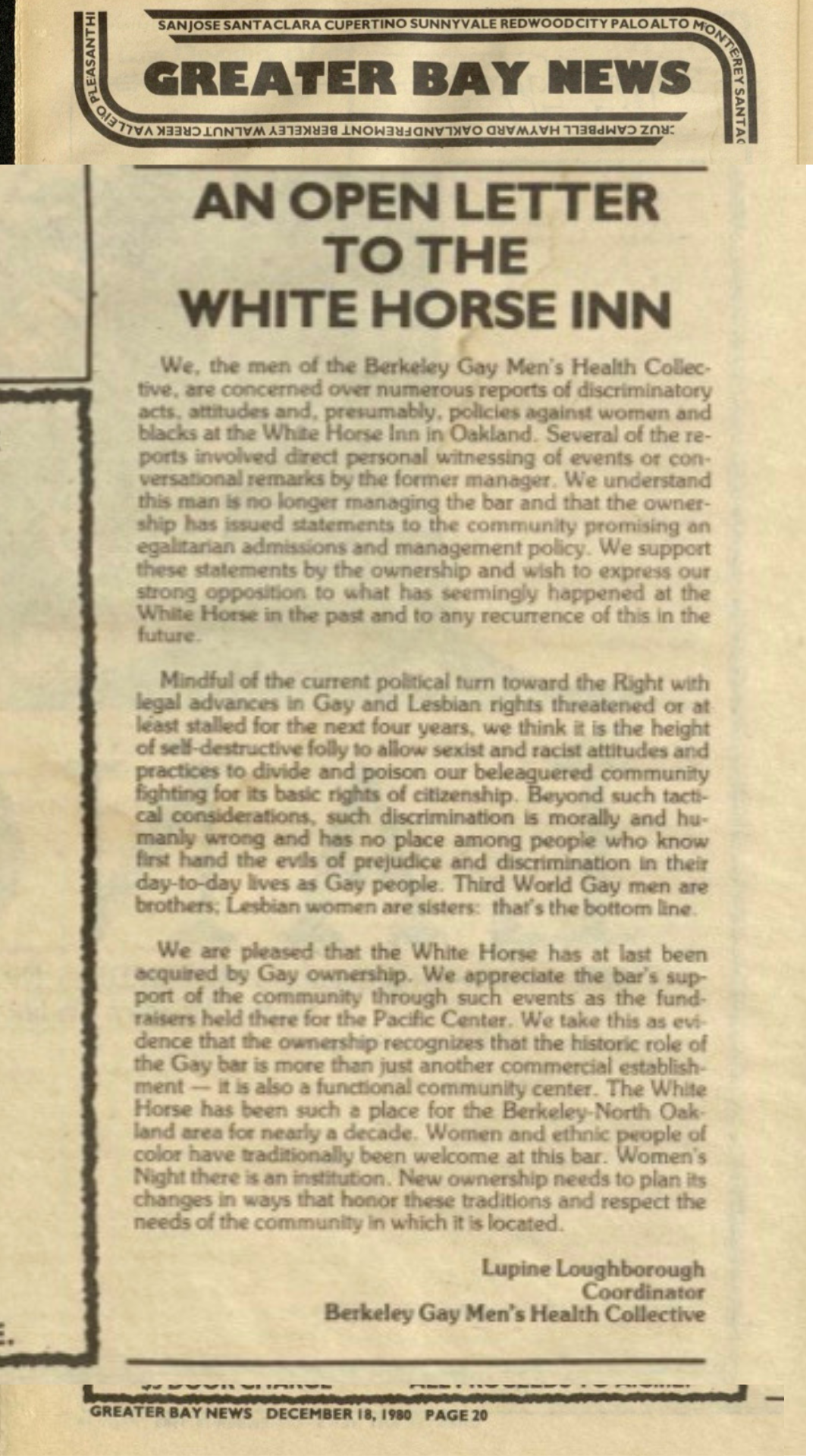
Read the transcript below alongside archival images of the bar since the early days…
Patty: Patty Dingle, I am the current owner of the historical White Horse bar in Oakland, California. I want people to walk in the space and feel what I felt, but also know that they don’t have to fit this certain mold. I often say we’re not a scene, we’re a vibe.
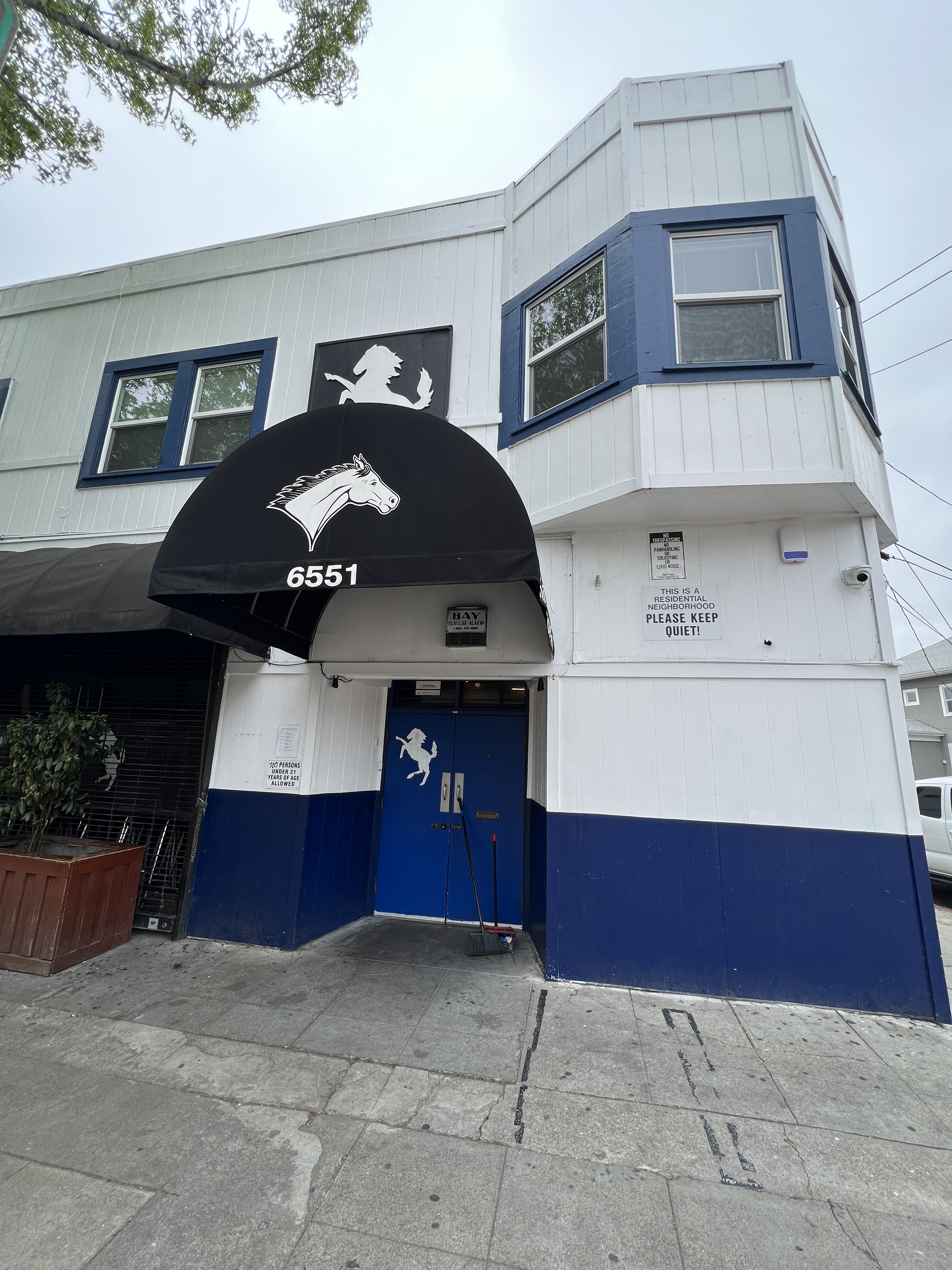
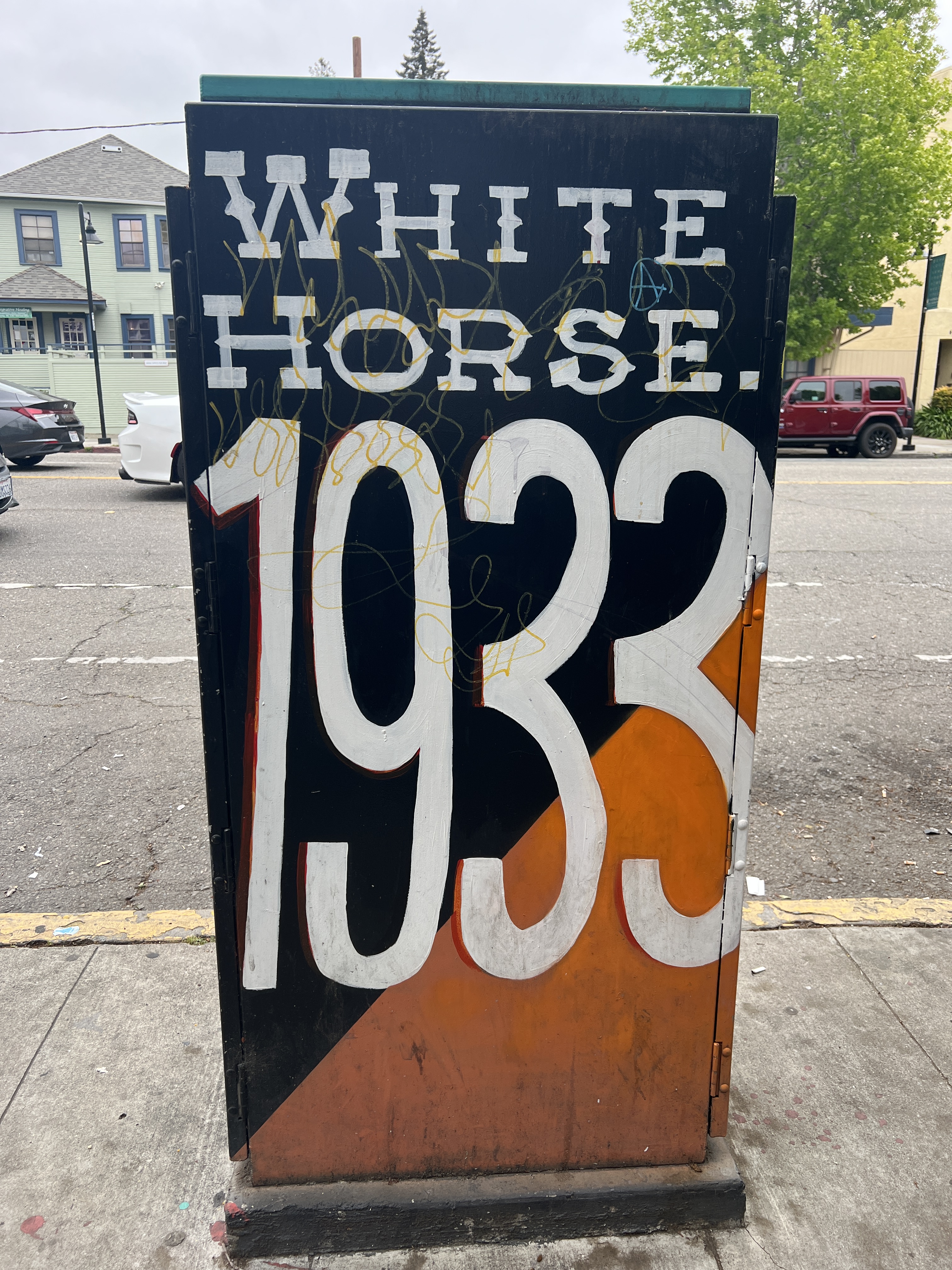
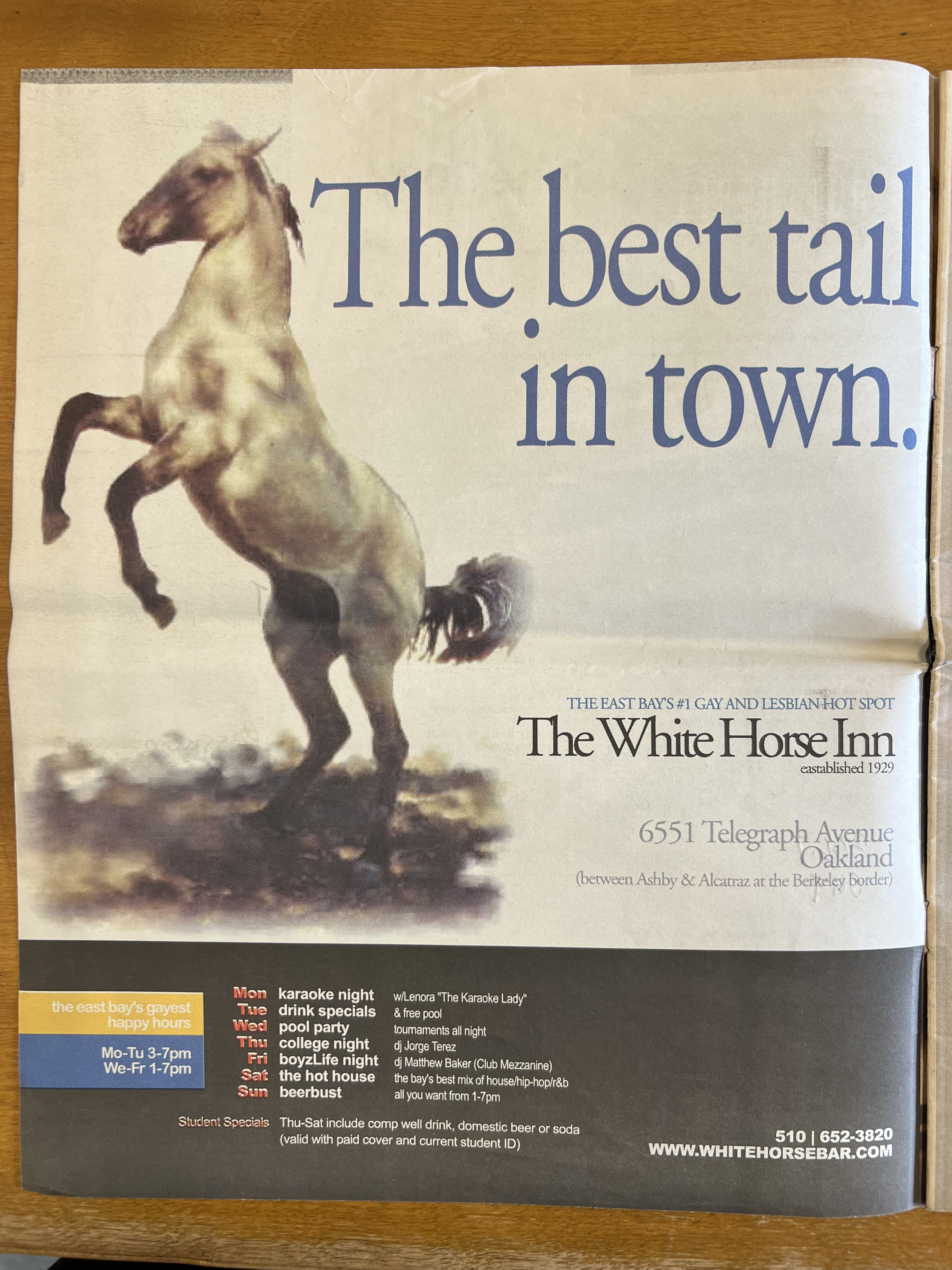
So I have to start with the history. I always tell people it’s the oldest operating gay bar in the United States. We just celebrated 90 years.
You walk through these doors here and you are completely part of the family. We have regulars that come in here. I met one regular a little while ago. He is, I believe, 98 or 99 years old and he has stories. And I want people in their nineties that are coming here today to tell stories about The White Horse.
Rafael: I’ll be 79 in August. The first time I came to The Horse was when I was living in San Francisco in the ‘90s. And as we say in Spanish, gracias el dios that I’m still here and The Horse is still here. Because it has a history. I thank God that I survived AIDS. I’ve been viral free for almost 40 years and I’m looking forward to celebrating my 95th birthday. As we say, vaya!
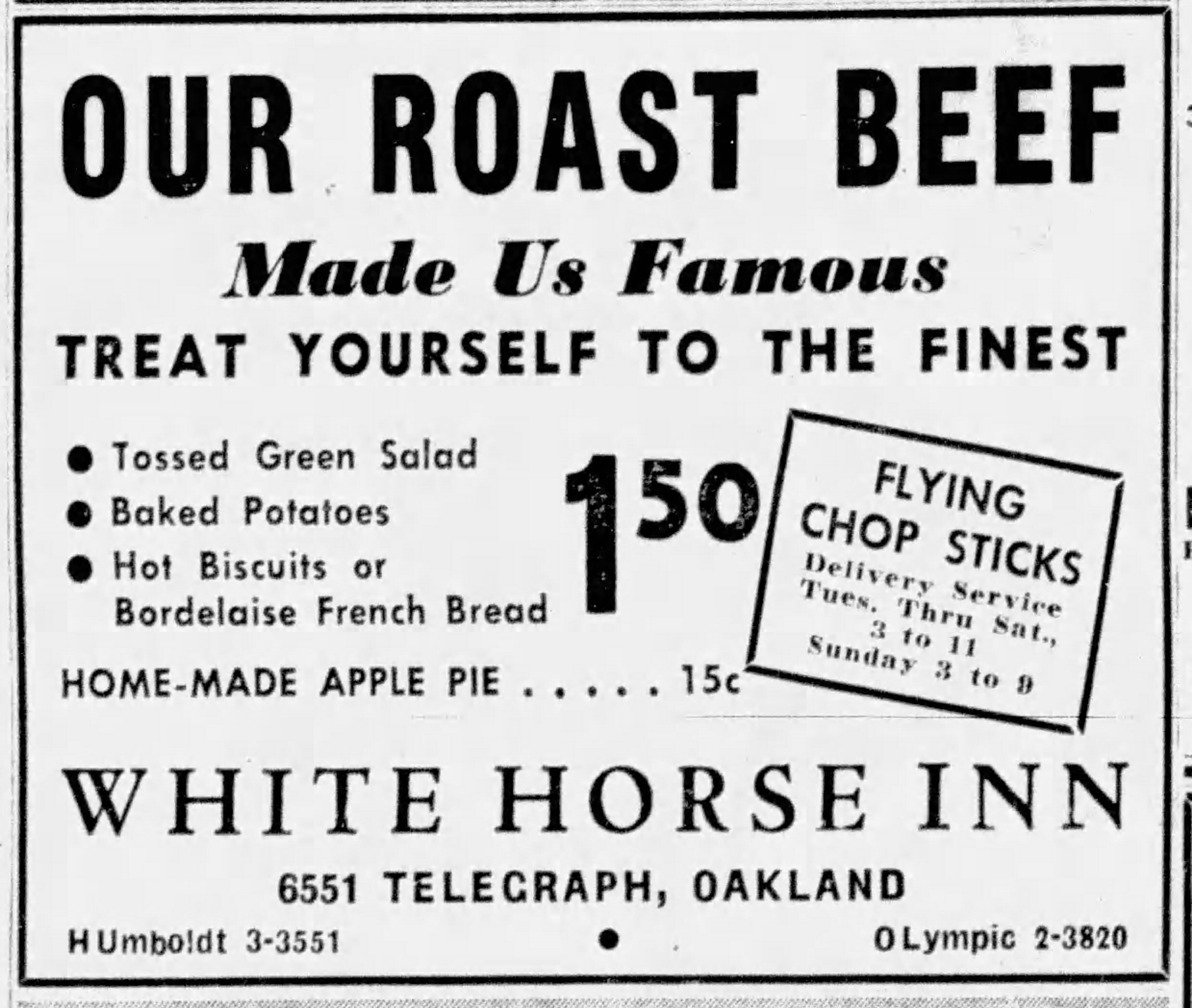
Chuck: Yeah, we came in for dinner when it was a Chinese restaurant, and we had to come back because my grandmother forgot her scarf. Anyway, I didn’t know it was a gay bar until we were about 15 years old. And we came in here because, well, we thought we’d get served a drink because we knew it was a gay bar. And we did!
“James”: I just walked in and started dancing. After that, I just started coming. I’ll be 59 next month. So way back then. It was nice. I danced and got in a little trouble and all that kind of stuff. I’ve always been coming here since then. It was more of a mature crowd, you know. Now it’s more of a younger crowd. And I’m not into the younger crowd so much, but it’s time for them to have their fun now. I’ve had my fun.
Alex: Walked in here and all of a sudden it just smelled like old men. And I was like, wow, what is this place? And then got a little bit of the history that had been here for a while at that point. That had gone through a lot of iterations as far as being able to stay open, you know, having folks really like come up against it ‘cause it was queer. There was times when women were treated badly here because it was considered a guy’s bar and so anything they could do to treat us bad so we don’t come back was in their purview. But we came and we became persistent. And so therefore, a lot of that energy went away over time. Different changes. Not as much as an old man’s bar became more of the people’s bar, especially the queer people’s bar. More people of color started to come and feel a little bit more safe. There was some dance nights, so therefore you would come and we’d be sweating in that back room like nobody’s business.
I was part of a troupe called the Rebels King and we performed here as drag kings. I did a James Brown rendition. Wore the wig outfit, everything, and the crowd just went wild. And that was one of my favorites. It’s really important for people to know that people risk their lives to be in here. And we set the foundation for the younger generation to have a space where they feel safe.
Gabrielle: The first time I came to the White Horse was one of the big moments of my life. I came, it was like the Rebel Kings and it was electric. It blew my mind and it was like the beginning of, like some huge change for me. So there was a season where I was at the White House like five days a week.
I stopped drinking a couple of years ago, and I think there’s a tension with queer life so much of our culture, happens in bars and this is a place for me of trying to foster queer culture. That’s kind of my interest in being here is queer culture and queer relationships.
I think also this is a place where generations often come into contact. But I think there are many people, many people, in the Bay Area who love this bar for years who feel that level of investment.
Maya: I’ve been coming to The White Ho, White House, White Horse on and off for the last 33 years. So I associate some musical periods and dyke dramas with various relationship periods. I’m also a wheelchair user and disabled and I find that dancing in my wheelchair is totally fun. I come here for karaoke, I come here for various forms of dancing, I come here for celebrations. I come here when I’m feeling mad, when I’m feeling sad, when I’m feeling happy. It’s really I would say, actually, this is the period of my life that I’ve come to The White Horse the most consistently, interestingly. This is a really important place. I know a lot of folks that went into recovery with drugs and alcohol and stopped coming to the bar scene in some ways. And then I think a lot of us, you know, I know folks that are in recovery, that still come here because this is their community hangout and I think that’s part of the real history.
Patty: There are two red lights in the front bar that come on when you turn the lights on in one of the restrooms. The restroom where that light switch is at is the restroom with the urinals in it. We have all gender restrooms. The rumor is, though, that was a men’s room. And we all know our gays are very clever to meet each other. And listen, I’ve been around the gays a long time. I know the little codes and the tapping of the foot in the stalls and all that. The rumor has it, though, that when someone went into the restroom and they turned the switch on, the red lights would come on and that signaled to others, Hey, someone’s in the restroom, maybe up for a little bit of fun. I need to confirm that because I’ve been telling the story [ laughs] and I want to make sure it’s accurate. Because it’s a great story.
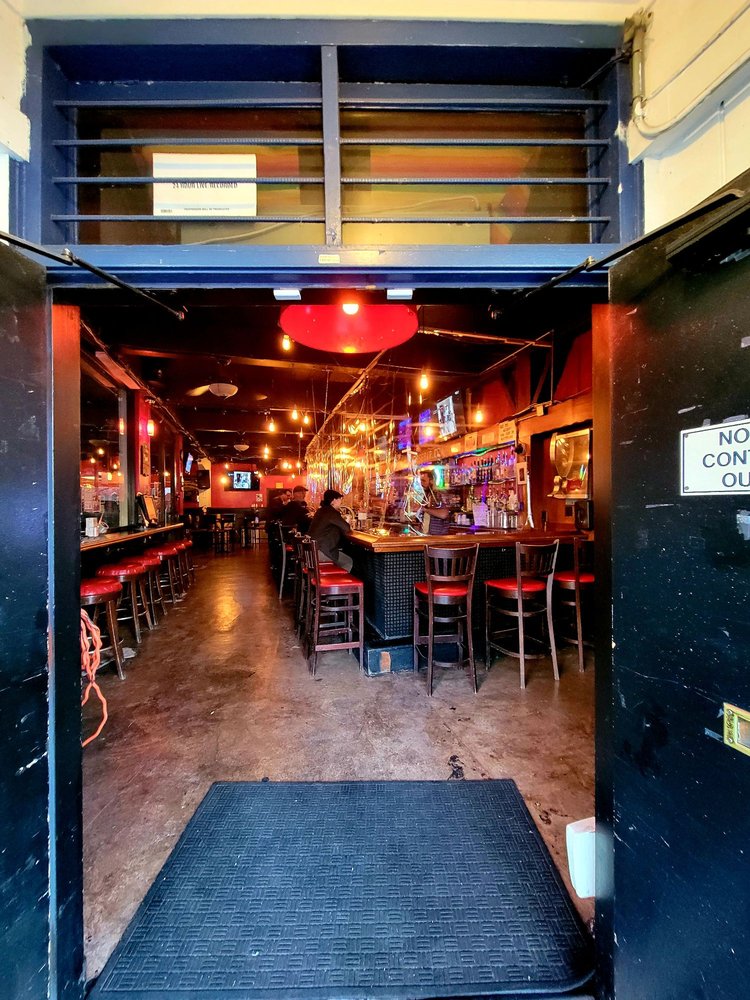
Jesse: But see, way back in the day when, you know, gay people are not allowed to be together, there would be a light right by their front entrance. As soon as the bell went or the red light flashing, then men would be like, Oh, how you doing? And so on and so forth. There was no holding hands or any kind of passionate, kind of movement at all.
Patty: But you know, the gay stuff is super secretive. It’s super interesting, I think because it was a gay bar – and obviously still is – I think the history can be a little bit challenged. I don’t know if there was a lot captured about it. But one thing we know, I’m going to say kind of for sure, is that it was never raided. Allegedly, there was a Chinese restaurant next door and people would go through the Chinese restaurant to get to the bar. And there’s a lot of quirky things in here.

Patty: But it’s an old building, so I kind of chalk it up to that. I do think there are ghosts here [laughs]. There’s these weird fireplaces in here. And, you know, we’re below apartments, so architecturally, it’s a very weird building. But it works.
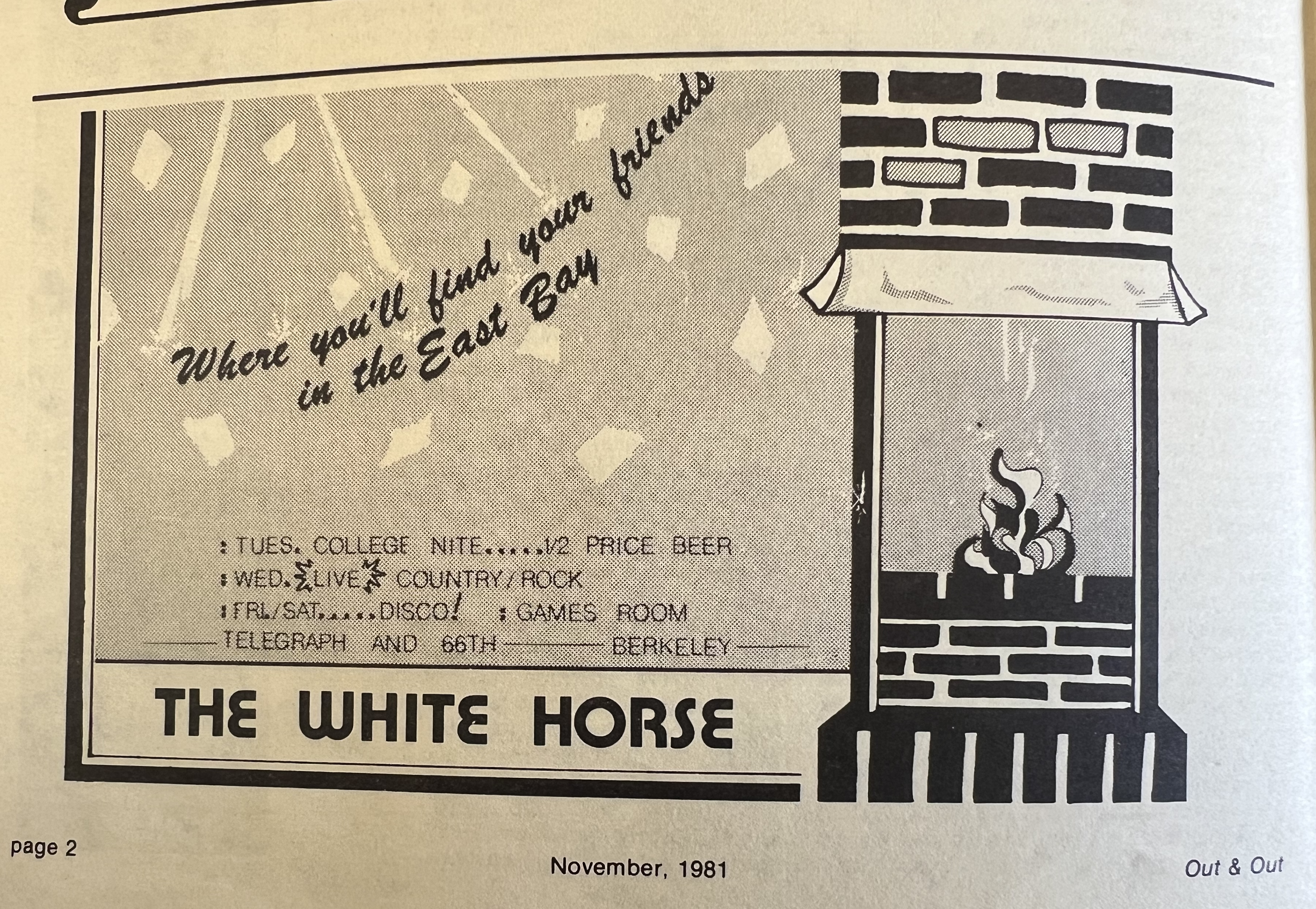
Ray: Upstairs, there’s an apartment there, and Chuck [former owner] still had that. So we slept on the floor. But before, the friends who were staying with – Bobby, who is no longer with us – said, ‘Don’t do that. If they invite you to stay, don’t do it. You’ll hear the dance floor from where you’re sleeping.’ I was too young, too stupid to take any notice. And I went to bed early with my husband, and we’re just like, Oh, my God. We can hear, and it was boom-buddy-boom all night until it finished. But that was just – we never stayed here again.
Patty: This building is completely lopsided. We have a really awesome pro-level pool table and that thing has to get leveled more often than not. And we are one of the few places – maybe the only gay bar? – that has a pool table. And Diamond pool table pro level by the way.

Sylvia: I started playing pool here. I learned how to play pool, I learned how to play pool really well. Because at the time there were a lot of really skilled lesbian women that were playing pool and that were showing – like, I was the young one here. I spent a lot of time here playing and learning how to play pool but how to be queer and safe and fall in love and not fall in love and how to drink. All of it! It was fantastic.
This was a VIP card that they gave regular members back in the ‘90s. I was 24 I think when I got it. I was coming here four or five days a week. I feel like I came out here and I got this in the mail. I felt cool. I felt special and like a VIP here. So the card says The White Horse VIP guest number 326. I would come in, especially at 24, I’d get to come in free and I bring a guest and I get a free drink. I used to walk in the bar and the bartender at the time knew my drink and would slide my bud light down to the bar and that doesn’t happen. And it was happening for me at 24. Iit’s like, I want to frame this because it was like I grew up in this place and I know a lot of people don’t want to say they grew up in a bar, but I came out here, I felt safe, I felt okay. I was still in the closet in other spots but here I was out and I was a VIP of The White Horse.
Patty: Just like how we know the history of this bar, this moment in time, as the owner, I have the opportunity to create history. And I want people to talk about The White Horse bar in 10, 15, 20 years, the same way we talk about it now. Oh, my gosh: the oldest operating gay bar, 1933, all these things. But in that I want them to say that a woman of color owned it for the first time ever. Saying that it was a place where they have a lot of fun. They felt the love. It wasn’t a scene, it was a vibe. The music was great, the cocktails were great, the mocktails were great. Right? I want people talking about that.
The evolution of our awareness of the community has evolved. Well, you don’t know what people’s stories are, and you never know that they may walk into this place and then maybe decide oh, I’m going to come out to my family, right? Because I felt the love at The White Horse when I went out. No judgment, absolutely not. And I have a big sign on the wall, it says ‘Hella Fine.’ ‘Hella’ is a homage to Oakland, but everybody’s fine. Whether it’s you’re fine or you’re fine. And that’s what I want everyone to feel.
Lana: The first time I came to The White Horse I was in the closet and so I drunk hella drinks. So what was that, like, ’98? So I’m a singer, I’ve been singing all my life and I would come to karaoke. And I always want it to be different and stand out. So I would remix my songs. One of my favorites, an the crowd favorite was I did a Norah Jones. Instead of ‘I don’t know I didn’t come’ I remixed it to ‘I don’t know why I didn’t cuuuuum. I slapped her ass until my hands were numb.’ [singing].. ‘till I saw the sun. I don’t know why I didn’t cum/ I liked her clit til my lips went numb/ I don’t why I didn’t cum/I don’t know I didn’t come.’
Raymond: Good evening ladies & gentleman. I first came to The White Horse back in the end of August when I first relocated here. It was such a great experience. My juiciest memory of The White Horse is: I’m a hot commodity baby! My hopes for the future of The White Horse: to continue to thrive on diversity, inclusiveness, of every ethnicity that is out there. Is is so important to make sure that every single gay bar out there is very inclusive of all that may walk through the doors. Cheers to many more years baby.
Music credits:
Thanks to: Patty Dingle and the staff of The White Horse, the Oakland History Room, and all the folks willing to share their stories.
Research and photos from: the Oakland History Room at the Oakland Main Library, Newspapers.com, Calisphere, Online Archive of California, Bay Area Reporter Archives
Recorded and produced by Elena Botkin-Levy/ GEMS Oral Histories & Audio Storytelling
 gemsoralhistories.com