
Mali
Location: Cable’s Reef (2272 Telegraph Ave)
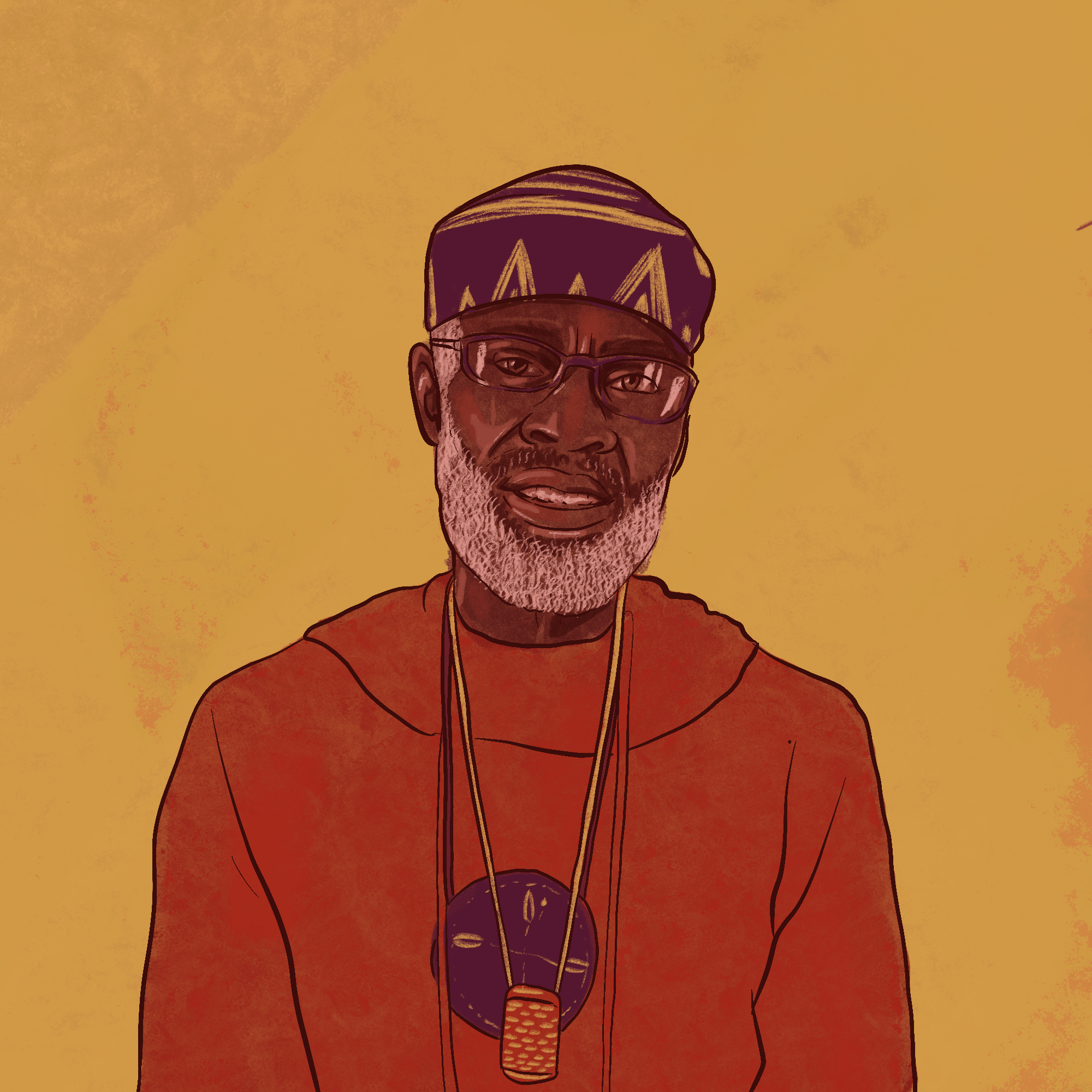
“The bar became a community staple” for education and connection. A pioneer in HIV/AIDS organizing and prevention, Mali, or Ernest Andrews, was born in Brooklyn, New York, in 1947 and moved to the Bay Area in 1981. With a background in theater and performance, he has held leadership roles across numerous HIV/AIDS organizations in San Francisco and Oakland, including UCSF AIDS Health Project, Glide, the Multicultural AIDS Resource Center, and the SF Third World AIDS Advisory Board. Mali was instrumental in bringing HIV prevention and education directly into bars in Oakland, such as Cabel’s Reef, reaching Black gay men where they gathered. He has been life partners with Randy Jordan, and they have been married since 2008. Their love story is one for the books.
Hear the Story
Read the story
-
My name is Ernest Andrews, that's my Christian name. But I belong to the Yoruba religion and they gave me a name. So Mali is the first part of the name and so that's the name I go by now, Mali. And I was born in Brooklyn, New York in 1947. I came to the Bay Area in 1981, been here ever since. My theater background goes all the way back to when I was a real, real young member of the Police Athletic League and a children's program called the Children's Hour. And I was involved in WNYC's radio program and their TV program from the time I was 10 until I was 23. And I became part of a dance company first. Then I became part of a group called Voices Incorporated, which is the black operatic ensemble because I'm a singer and dancer. And then I joined Richie Havens, had a group that he was putting together. Eventually they'd go to Broadway, but we traveled for almost 7 years every place else before we got to Broadway, and it was called Safari 300. And I was a featured performer in that show. And the review was about the historical movement from slavery to freedom. So once Safari closed, it was like, well, I got to go audition for a job. And I hadn't done that in like 7 or 8 years, and not something that I wanted to do. So I said, Okay, well, what can I do? What am I going to do? So I decided, well, you know, Ernest, you never finished college. I went to Queens College. I never finished because theater got in the way. And then I went to graduate school and then I came to California. And when I – AIDS chose me, I always say that I didn't choose it. When that happened, I tried to look at skills that I already had that I could use to raise people's consciousness, especially since I was cognitive trained in this whole perception idea of if you can change a person's perception, you can change their behavior. So it was about knowledge.
I wasn't a bar person. You know, I'm from New York and I was in the underground club scene where they didn't serve alcohol. They served psychedelic drugs and lots of fruit and things. And so I wasn't really an alcohol person. But when I came to the Bay Area and started doing HIV work, I realized that that was one of the places that I could really reach people. The bar became the community staple. Cable’s Reef in Oakland, Cables had its history. Actually, it was actually one of the first bars in the East Bay that actually did AIDS education and prevention in the bar long before there was even any organizations. Because I was doing the work in San Francisco, there was nothing happening in the East Bay. And I went to Jack, who was the bar owner, and told them about what I was doing. And he said, 'Well, if I give you some money, will you create some prevention materials for the bar?' And I said, yeah. So he gave me the money. I did posters, matches, little small pamphlets and stuff with it. And then eventually he asked me to come in and actually do classes in the bar. And then later on the Pacific Center AIDS Project was formed. And then there was another bar just up the street, Bella Napoli, and Julius owned that bar. And then he invited us to come and start doing AIDS education in that bar. So I had all kind of events, karaoke and HIV, meet and greet with HIV themes. And so it was a lot of things that went on in that bar that really kind of, I think, spearheaded the community, gave it a jumpstart. So those two bars really were paramount in educating African-American men in the Bay Area about the risk of HIV. Those were the only two black bars that predominantly black patrons went to in the Bay Area where they felt comfortable. Because at that particular time, all the bars in San Francisco were carding you. You had to have 2 or 3 copies of ID unless you went in there with a white person who would challenge them at the door. And say, 'well you didn't ask me for 2 copies of ID and he's my friend.' So then you would be able to get in. But most people who lived in the East Bay didn't want to deal with the hassle. And you'd be surprised how many people were born and lived in the East Bay at that time who had never been to San Francisco. I could not believe that coming from Brooklyn. Coming from Brooklyn and having traveled in all five boroughs, I couldn't see how anybody could do that. But I met a lot of people who – and then they had reasons why. Once I began to go out and see, I realized that they were comfortable in their own neighborhood. And it was a neighborhood bar. And so that's when I started frequenting the bar. So for me, I was doing AIDS work from 1981. The test came out in 1985. There were mixed feelings about the tests. Don't take the test because it's limited, it's not gonna tell you everything. So, I was borderline on that, on whether I should take the test or not. And having known so much about the opportunistic infections, because it was my work. I began to have a lot of nerve problems. Rocks and feelings in the bottom of my feet and in my fingers. And at that time, I was a patient of Dr. Robert Scott, who was major HIV specialist in the Bay Area, African-American man. So I went to him and I told him what was going on, and he said, 'well, young man, I think it's time for you to have the AIDS tests.' And I said, 'Dr. Scott, now you think that's really.' He said, 'No, it'll give me someplace to work from.' So he said, 'So how you feel about that?' And I said, Well, the interesting thing is that when I got involved in AIDS work in 1985, one of the reasons I got involved in that work is because I thought that I was an at-risk person based on the information that they were first giving, quote unquote. And so I said, 'so, you know, if it happens, I won't be surprised.' Sent me to have the tests. And they told me I was HIV positive. And I said, okay. And they said, 'Well, don't you want to see somebody? Don't you want to–?' And I said, 'the only person to see is me. This is the work that I do. I know a little more than most people.' I said, so I'm good. And so 1987 was the first time I was diagnosed. I've had really minor things. Neuropathy was my biggest thing. And then I was diagnosed with IRIS when I first started taking the meds, the information that comes your whole body. And then later things like costochondritis but no cancer or pneumocystis. I never had any of those. And actually, I've never really been hospitalized for HIV related disease. So I've been lucky. Okay. And it's interesting because when I first was diagnosed, Dr. Scott looked at me and he said, 'you might die from a lot of things, but AIDS won't be one of them.' And he said, 'Well, first of all, you're with me. And second of all, the universe has plans for you. So you're not going to die from AIDs.' He's deceased now, and I'm still here. And I always hear his voice in the back of my head saying that this disease is not going to take you outta here. Something might, but it ain't going to be AIDS. And so I moved from that perspective all my life. And so it's worked.
-
There was no organizations then in the East Bay. Now, there was the San Francisco AIDS Foundation, San Francisco AIDS Health Project, which I was one of its first employees. There was that organization, and then there was Shanti, you know, for care. But there was nothing happening really in the East Bay. And that's why the Pacific Center started the Pacific AIDS Project to try to deal with that. The Pacific Center AIDS Project came out of the Pacific Center. They became the East Bay AIDS Project. And once they became the East Bay AIDS Project, John Davis said, I want you to come and be my director of direct services. At that particular time, I was working for UCSF AIDS Health Project in San Francisco. I was director of the Youth and AIDS Program. So I was having some issues there, reaching out to people of color. Actually, I was one of two people of color in that organization, and they were really dragging their feet on having some kind of response around that. So I lived in Oakland at that time, so I joined. We were doing fine for maybe about a year. And then there was an announcement that they were going to give back the AIDS funding to the State Office of AIDS, which means we would have to shut down. They gave the funding back. I said, I don't know what I'm gonna do. I have 600 clients and 500 volunteers. What am I supposed to do with these clients? If they shut this agency down, where am I going to serve them? The Board decided that they were going to hire someone to do a needs assessment to determine whether it was feasible for the agency to stand on its own and decided that it was feasible. So they funded for a new organization, AIDS Project of the East Bay. And that's how AIDS Project of the East Bay came to be. APB is still in existence today. And that's where they came from. They came from all that confusion and conflama, as I would say in the old days. And out of the fire came the phoenix.
I became the director of the Third World AIDS Advisory Task Force, and I'm also one of its founders. Then I worked for the Multicultural AIDS Resource Center and got really fed up with the AIDS politics because by that time it was crazy. See, in the beginning, everybody worked like 24 hours. You know, we did our jobs in AIDS and then we went and met to do advocacy and create organizations that would shake money free from the state and the federal government so that we could continue doing the work and do more work. But that's one of the saddest things about, having to live all these years through the process of the epidemic and have been there in the beginning when people were motivated and sad and angry, but at the same time they were driven to help themselves because that's what it was. The government wasn't helping us. So what little bit of funding we were having, we were using it to stretch, to do all kinds of things. I mean, I cannot count the number of countless hours we spent in meetings just talking about the future of what prevention could look like and people of color communities. What I'm unhappy about is the things that our leaders and the governments should have learned from the AIDS pandemic to avoid this pandemic. And they didn't do it. And it's been historically that every time we encounter something that's similar from something that we did before, people start over from square one. I was at the first AIDS Leadership Forum, which formed in L.A., which traveled around the country doing AIDS education and awareness. And I was at that conference, and there was a big rift between lesbians and gay men. And we had just come out as heated meeting. And I walked in the elevator with this beautiful woman, Intombe Howel. And she said to me, 'Hey, what do you do?' And I said, 'Oh, well, you know, I'm technically a performer.' And she said, 'Oh, you know, I used to do that, too.' I said, 'where?' She said, 'New York.' I said, 'Really?' She said 'Yeah!' So we started talking and she said, Well, you know what? Why don't we do something together for tonight's banquet to kind of heal all that's going on. She knew a woman who – because there weren't that many women at the time that had died from AIDS – but she knew a woman who had died from cancer and kept it a secret. And my roommate was one of the first people in Oakland to die from AIDS. And he tried to keep it a secret as much as he could. And so we decided we'd write this poem about the two secrets and how similar they were and how we digest them and dealt with them. And the piece was called C.C. and Keith. And we did that, and the people went crazy. After that, she said, Okay, well, this is our calling. We need to do something. So we started writing pieces with AIDS awareness in mind and LBTQ awareness in mind. And we formed Sweet Potato Pie. Sweet Potato Pie's goal was not to charge any AIDS organization that needed us to come to perform, either to raise money or to raise awareness. All they had to do was contact us. That's what we did because we already had jobs. So it wasn't about the money. Intombe was Director of Women's Services at GLIDE and I was Director of Youth Services at AIDS Health Project. And those were very good salaries. So it wasn't about the money. Intombe HOWL. Amazing. She was an amazing woman. She died just too soon. We continued to perform as a duo. Peter Barclay. So we continued until he got sick from AIDS and then he died. And then once he died, we put Sweet Potato Pie to rest.
I never thought my life was going to turn out like this. That I would – you know, I wanted to be a star. When I was younger. I wanted to go to Broadway. And then once I went to Broadway, it was like, what do I do now? Because I never aspired to do anything else other than that. And so then when that came, I had to rethink my life. I think in rethinking it and making those various moves, which I always tell people, we are not in control because somebody else made those decisions outside of my head. And that's why I wind up being where I am. So I am where I am because I'm supposed to be. You know, something my grandmother used to say and my grandma and I were very, very close. She would say, no matter what you do, don't let your life be in vain. And so I felt that when I came to the Bay Area in 1981 and then got involved in HIV, that HIV chose me. I didn't choose it because it wasn't something that I was looking to do. And so for me, once I got involved in AIDS and realized the mammoth work that needed to be done then, and the fact that I was motivated to do it and don't know where that motivation was coming from. And then when I dug a little deeper, I felt that that's the way it was supposed to do. AIDS chose me because I was there at the right time. And so that was fulfilling my grandmother's edict that, let your life not be in vain. So I don't really have any great future expectations because I feel that every day that I've gotten so far, it is a gift to me. I look at it as living life like it's golden each day. I want to write a book maybe eventually. Maybe two. And, you know, I continue to take life as it comes. But so far it's been good. I mean, I have no complaints. No regrets. I'm happy at this point in my life. I ain't rich but I ain't never been. [Laughs] So, you know what I mean?
-
Mali: Like I said, I came here in 1981 and in 1983 I was chosen by UCSF's AIDS Health Project to be the Youth and AIDS Director for the Youth and AIDS Project. And one of the things that was missing was that there wasn't anything targeting people of color. So I went to the AIDS Health Project and told them that I would be willing to start a group. We called them the Worried Well. I went around trying to recruit people in the group, and one night I went to this bar that used to exist called the Eagle Creek. And Randy was one of the patrons in the bar. At that time, we actually both were involved in a relationship, so that was our first actual meeting and I talked to him about being part of the group. I actually didn't see him for many, many years after that until 1995. Then you can tell.
Randy: Okay. As time went by, we both had different relationships and such. And I wasn't basing it on that, but I always felt his spirit. I had worked a job that was a very high pressure job. Besides designing I worked for the Veterans Administration as a supervisor, so I had a lot of stress. So that day I decided, I would go out and have a drink. When I got to the bar, he was sitting there. And I said, 'Ernest Andrews?' And he said, 'yes.' And we had a casual conversation. He invited me over and we talked. And we've been together basically ever since.
Mali: The universe obviously had plans for us 'cause we were circling each other like satellites for years. [both laugh] Okay. And, you know, after that first meeting. And then eventually in '95, we got together and then 2008, I asked him to marry me.
Randy: No, before then.
Mali: Well, it was before that we got married 2008. [both laugh] Well, that's what I mean, it didn't actually happen until 2008.
Randy: But it wasn't a mistake. Trust me.
Mali: Will be 24 years a mistake [laughs].
Randy: I said it wasn't a mistake babe.
Mali: Well, first of all, he was black and beautiful. That was the first thing that attracted me to him. And the fact that he was an artistic person in his soul. I mean, he's just that way. It was home with him. Then sex was off the chain. So I'm just like, wow, this is amazing. And then I can sit down and talk to him about the variety of things, especially around the emotional things that I was dealing with, being a HIV advocate in the craziness of all the racism and all the other crazy stuff. He was like my refuge, you know? I could tell him about those kind of things.
Randy: I love his bluntness. He's blunt to a fault. I love that he's open minded. I love that he get along with people. He do not mind trying new things. He's easy to talk about on a variety of subjects so could have a wonderful conversation. And is good to be with him and we can have quiet time and I'm not worried that something is wrong. And that's things that attracted me. And the fact that he's an alpha male and I'm very attractive to alpha. So that's some of the things that was attracting me to him.
Mali: I mean, at that time, I was pretty sure that this is it. I didn't know how long he would be here or how long I would be there.
Randy: And that was irrelevant.
Mali: Well, actually wasn't irrelevant for me because my whole life changed once I was diagnosed. I had big savings, I began to spend it. Sold one of my insurance policies, you know what I mean? I did a lot of things based on the fact that I probably would make it to 50. And then 50 came.
Randy: [Laughs] and then 60.
Mali: Okay?! Oh my God, I'm still here. Randy was going through some changes then, but he was still here.
Randy: I had just had my spleen removed and diagnosed with lymphoma.
Mali: So I said, okay, well then that's what it is. I'm supposed to be here for him. He's supposed to be here for me. So, we going to be here awhile. Just came to grips with that. It was like a revelation.
Randy: Well, we were already engaged, but one of the reasons we got married when we did, because I was going in for a hip replacement.
Mali: Well that ain't the reason.
Randy: Well, no, no, no. Listen to me.
Mali: [Laughing] Okay.
Randy: A lot of times, I went to the hospital, he could not go with me because we was not married. And they would not allow him into the O.R. to see me.
Mali: Right.
Randy: So he said when I was going into hip surgery, we're not going through that again. So why don't we just get married before you go into surgery. Which was three days before I went into surgery. But we were going to get married anyway, we just hadn't set a date.
Mali: I realized the impact that we had on other people just being present. And then I realized that that was something special. And even to this day, how people come up to us and say, you know, we are so happy to see you guys. The fact that you guys are still together and you have no idea how much of a role model you guys are for us. And then there was a group called The Dinner Club, and they selected us as the couple of the year maybe about 5 years ago. The impact that we have on just living our lives is a contribution in itself.
Randy: And I just happened to be a lucky person because I have met the love of my life. And I know for me that it's luck. And it's a blessing. And I appreciate it and realize without getting stuck on my own mortality, that at any second it can be taken away. So that made me love more intensely, even more. It allows me to say the things that I don't want to say.,I wished I had ta say it to him. So sometimes he may get sick of me saying, I love you. I don't saw it for a response. I'm just saying it because it was in my heart and I need to say it. And if you going away, I don't wanna say I wished I woulda tell him I love you. You know I love you. And I have no shame in saying it because I do.